
 Global
01 /
Lower Extremity Amputation

Clinical Value
Lower extremity amputation may significantly alter the user’s center of gravity, balance, and propulsion characteristics. Additionally, improper positioning can lead to permanent knee flexion contractures in transtibial amputees. Flexx adjustable rear axle position allows clinicians to configure the wheelchair according to the user’s level of amputation, stability needs, and functional presentation.
Functional Outcome
Improves wheelchair stability, propulsion efficiency, and transfer safety while supporting long-term positioning needs.
02 /
Progressive Health Condition
Clinical Value
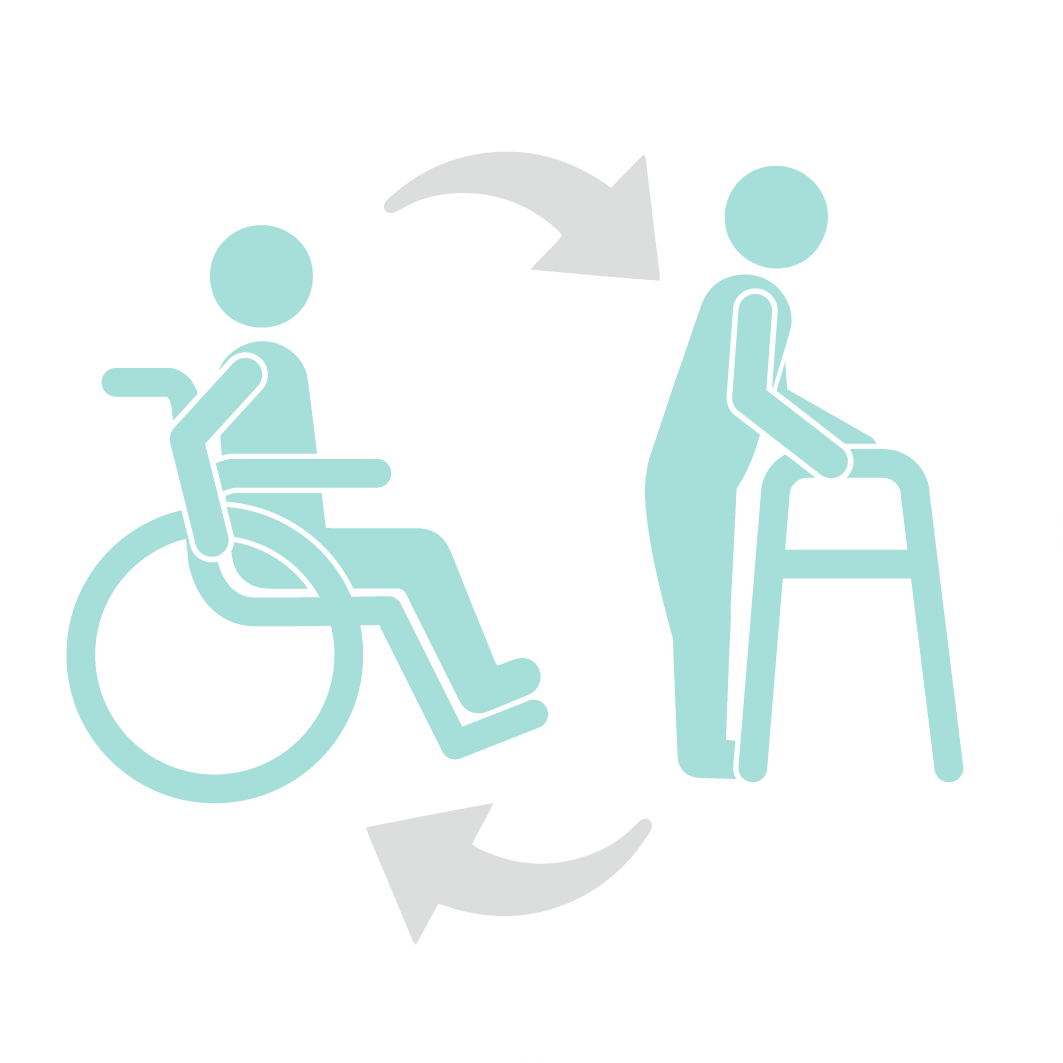
For users navigating the cycles of recovery and progression, physical needs are rarely static. The Flexx multi-adjustable frame allows for continuous reconfiguration, ensuring the wheelchair provides maximum support during functional decline and optimizes independence as strength returns. This adaptability allows the chair to remain a therapeutic tool through different rehabilitation stage.
Functional Outcome
Supports long-term mobility and positioning goals while reducing the likelihood of premature equipment replacement.
03 /
Self-Propel
Clinical Value
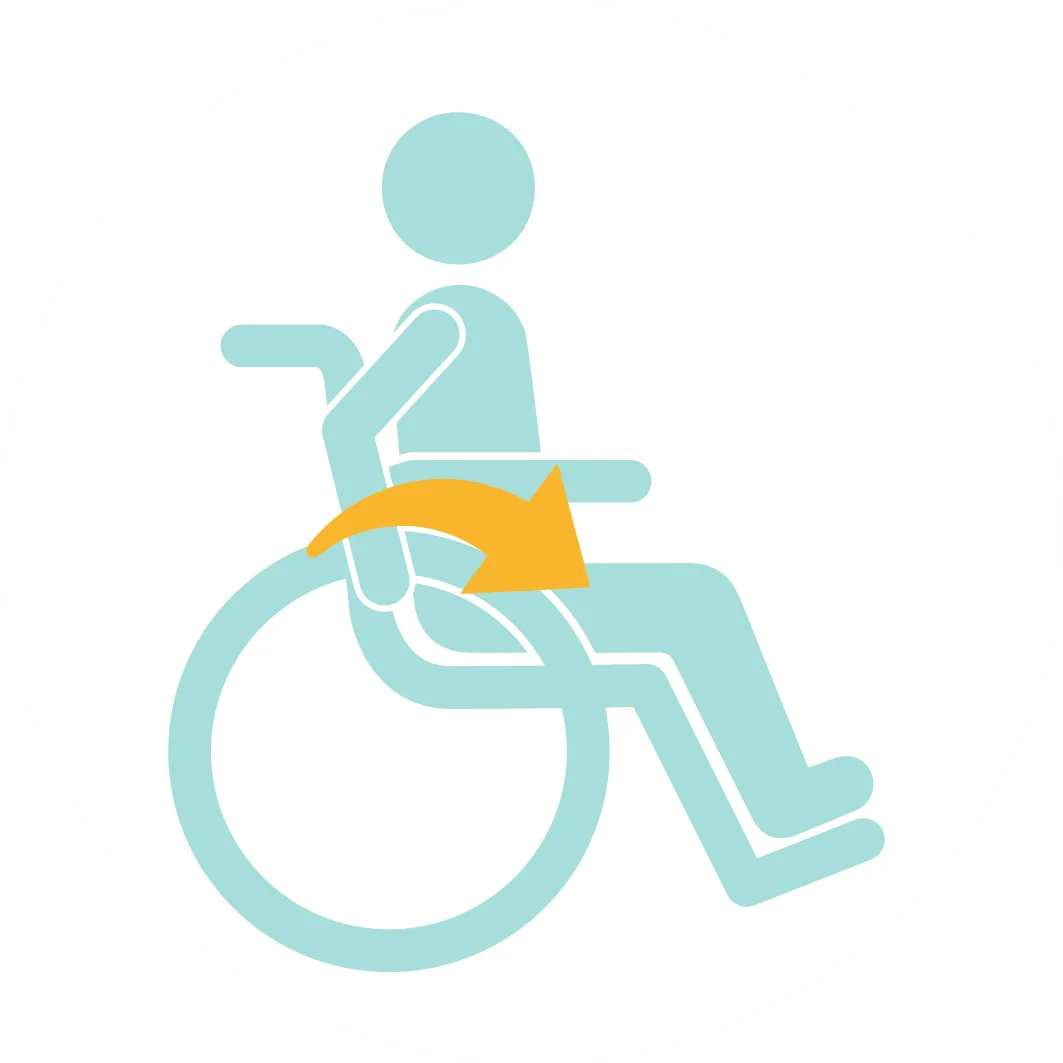
For the active user, upper extremity health is the lifeline to independence. Since self-propulsion requires thousands of repetitive strokes daily, the wheelchair must be precisely tuned to the user’s unique body proportions to prevent long-term joint breakdown. By fine-tuning the rear axle position, seat height, and center of gravity, clinicians can provide the user with optimal handrim access. This customized setup maximizes propulsion mechanics.
Functional Outcome
Improves propulsion efficiency, reduces fatigue, and supports long-term functional independence.
04 /
Foot-Propel
Clinical Value
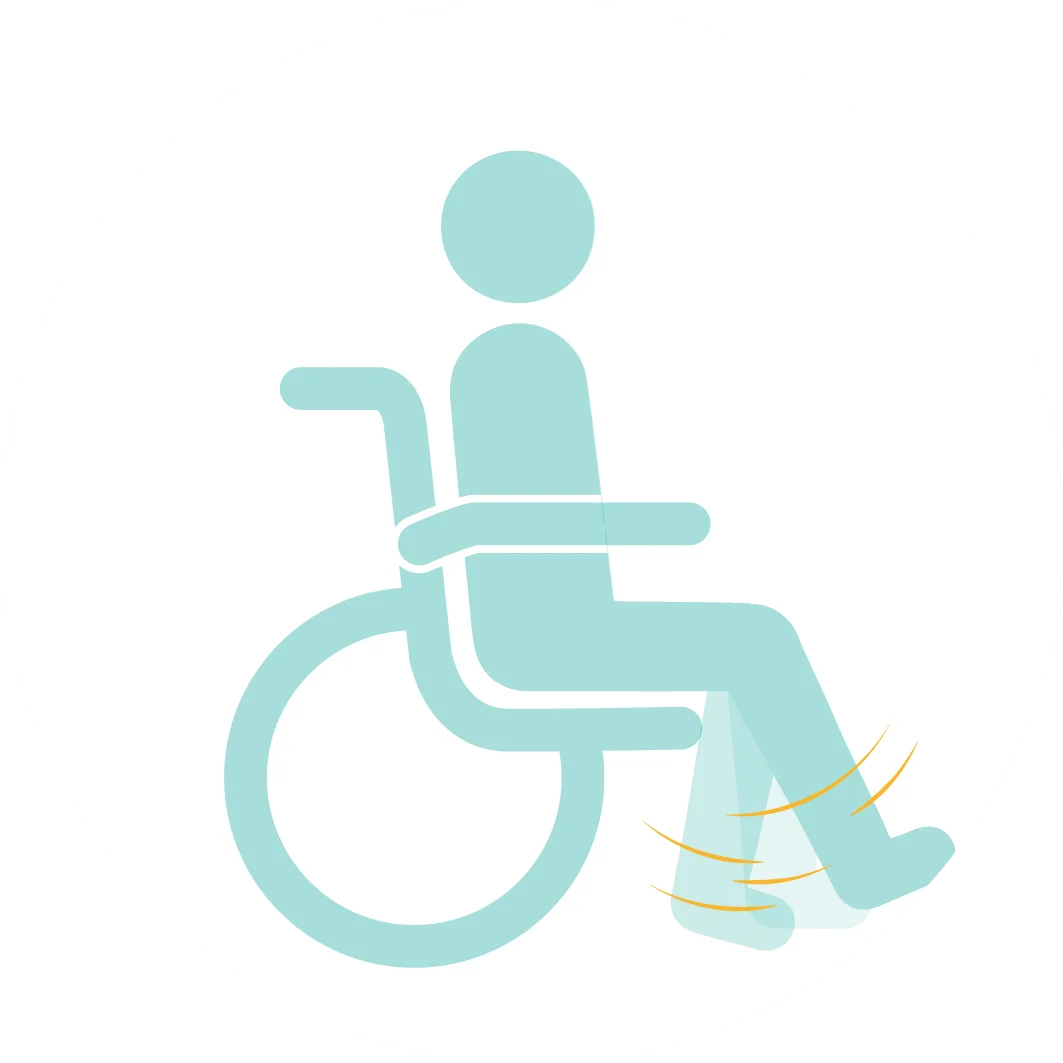
For the foot-propelling user, the wheelchair must provide a direct connection to the ground without obstructing leg movement.
The Flexx optimizes this by combining adjustable seat-to-floor height for maximum foot-to-ground contact with swing-away legrests that eliminate interference during the propulsion stroke. By further adjusting seat depth, clinicians can provide the necessary clearance for a full range of leg motion.
Functional Outcome
Improves foot propulsion efficiency, enhances indoor mobility, and supports functional independence.
05 /
Overweight

Clinical Value
For users with higher body mass, managing redundant soft tissue and a shifting center of gravity is critical for both comfort and safety.
The Flexx HD utilizes a reinforced frame and angle-adjustable backrest to accommodate unique body contours while maintaining postural integrity. By shifting the axle position rearward, the system broadens the base of support, ensuring the chair remains stable and secure during propulsion and transfers.
Functional Outcome
Supports safe daily mobility, improves seating stability, and enhances long-term wheelchair usability.
06 /
Taller User

Clinical Value
For taller users, proper thigh support is essential to distribute pressure and maintain pelvic stability. A chair that is too shallow forces the user into a “slumped” posture, increasing the risk of skin breakdown and back pain.
The Flexx Tall addresses this by providing extended seat depth while keeping the seat width narrow.
Functional Outcome
Improves seating alignment, enhances propulsion efficiency, and supports overall functional mobility.